
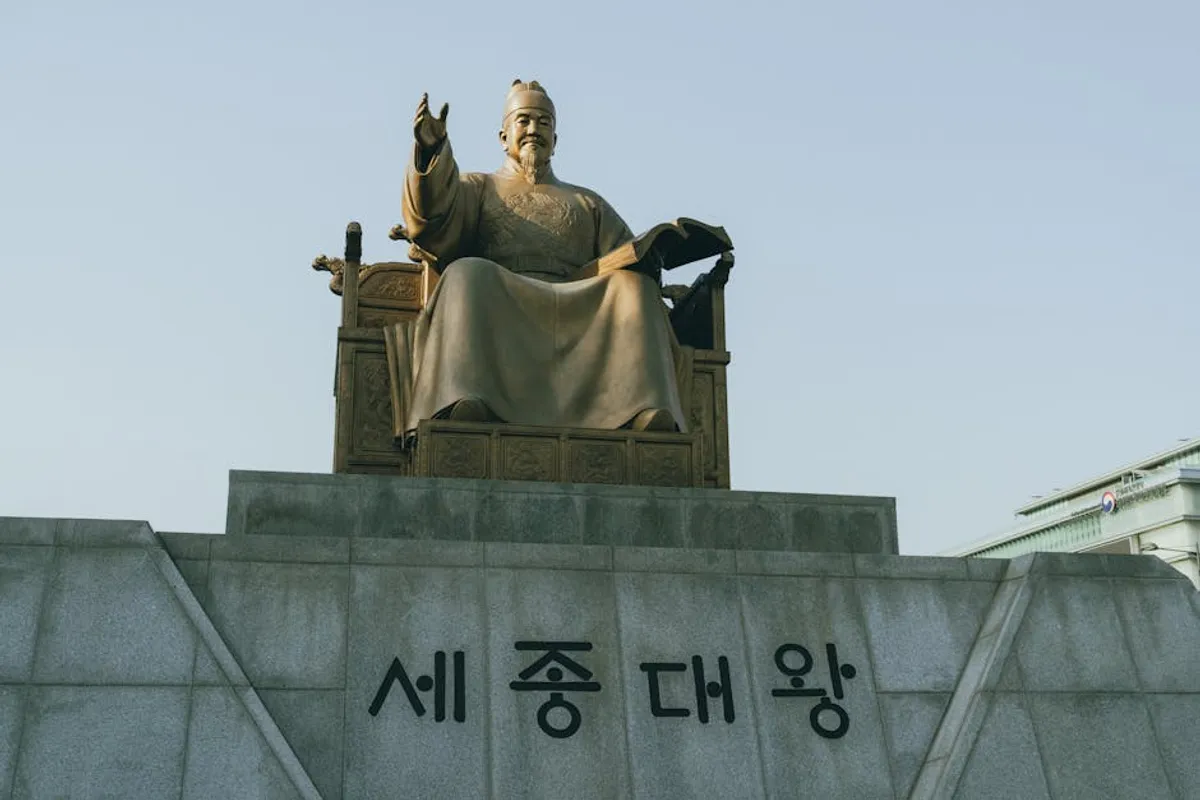
Navigating the extensive landscape of Korean history requires selecting resources that align with specific learning objectives, whether for academic research, general knowledge, or a deeper understanding of cultural nuances. The sheer volume of available texts, ranging from comprehensive multi-volume academic works to accessible single-volume overviews, necessitates a discerning approach. Key considerations include the author's perspective and methodology, the historical period covered, the depth of analysis, and the inclusion of primary source material. This curated selection focuses on foundational texts and influential interpretations that collectively offer a robust framework for understanding Korea's complex past.
How to Choose Korean History Books
Selecting the most suitable Korean history books involves more than just picking a popular title. Evaluate the author's credentials and potential biases, as historical interpretation is rarely neutral. Consider the book's scope: do you need a broad overview spanning millennia, or a deep dive into a specific era like the Joseon Dynasty or the Korean War? Academic texts often provide rigorous analysis and extensive citations, while more popular histories prioritize narrative flow and accessibility. Check for updated editions, as historical scholarship evolves with new archaeological findings and re-evaluated primary sources. Finally, assess the inclusion of maps, timelines, and illustrations, which can significantly enhance comprehension, especially for complex geopolitical shifts.
1. A New History of Korea by Ki-baik Lee
Ki-baik Lee's "A New History of Korea" stands as a monumental work, often considered the definitive single-volume history written by a Korean scholar for a global audience. Originally published in Korean and meticulously translated, it provides a comprehensive chronological narrative from prehistoric times through the late 20th century. Lee, a respected historian, integrates political, social, economic, and cultural developments, presenting a nuanced view of Korea's internal dynamics and external relations. Its strength lies in its balanced perspective and its thorough grounding in Korean-language scholarship, offering insights often missed by non-Korean authors.
Best For: Serious students and academics seeking a foundational, comprehensive, and authoritative overview from a leading Korean perspective.
Pros:
- Comprehensive coverage from ancient to modern times.
- Authored by a highly respected Korean historian, ensuring deep cultural and linguistic insight.
- Balanced integration of political, social, and cultural history.
- Extensive bibliography points to further research.
Cons:
- Dense academic prose can be challenging for general readers.
- The sheer volume of detail might overwhelm those seeking a quick introduction.
- Some interpretations reflect a particular scholarly tradition, which may require cross-referencing with other perspectives.
Verdict: Essential for any serious study of Korean history, offering an unparalleled depth of scholarship from an internal perspective, though demanding for casual readers.
2. Korea's Place in the Sun: A Modern History by Bruce Cumings
Bruce Cumings' "Korea's Place in the Sun" is a highly influential and often provocative modern history, focusing primarily on the 19th and 20th centuries, with significant attention to the Korean War and the division of the peninsula. Cumings, an American scholar, brings a critical and often revisionist perspective, challenging conventional narratives, particularly regarding US involvement and the origins of the Korean War. His work is characterized by its deep engagement with primary sources and its focus on class, ideology, and international relations. It's a cornerstone for understanding contemporary Korea.
Best For: Readers interested in modern Korean history, particularly the colonial period, the Korean War, and the division of the peninsula, seeking a critical and detailed analysis.
Pros:
- Offers a compelling, often revisionist, interpretation of modern Korean history.
- Deeply researched with extensive use of declassified documents and primary sources.
- Strong focus on the geopolitical context and internal social dynamics shaping modern Korea.
- Highly engaging and narrative-driven, despite its academic rigor.
Cons:
- Its critical stance on US policy and certain historical events can be controversial.
- Less coverage of pre-modern history, making it unsuitable as a sole comprehensive text.
- The author's strong voice may not appeal to all readers seeking a more neutral account.
Verdict: Indispensable for understanding the complexities of modern Korea, providing a powerful, albeit debated, counter-narrative to many established views.
3. The Koreans by Michael Breen
Michael Breen's "The Koreans" offers a contemporary, journalistic, and highly accessible overview of South Korean society and its historical development, primarily from the mid-20th century onwards. As a long-time foreign correspondent in Seoul, Breen provides an insider's perspective on the country's rapid economic growth, political transitions, and unique cultural characteristics. While not a traditional academic history, it grounds its observations in historical context, making the past relevant to understanding present-day South Korea. It's an excellent entry point for those new to the subject.
Best For: General readers, business professionals, or travelers looking for an engaging and current introduction to modern South Korea's history, culture, and society.
Pros:
- Highly readable and engaging, written in a journalistic style.
- Provides excellent insights into contemporary South Korean society and its historical roots.
- Authored by an experienced foreign correspondent with deep personal knowledge of Korea.
- Good balance of historical context and current events.
Cons:
- Less academic rigor and detailed historical analysis compared to scholarly works.
- Focuses predominantly on South Korea, with less attention to North Korea or pre-modern history.
- Can sometimes lean on anecdotal evidence alongside historical facts.
Verdict: An outstanding gateway for understanding modern South Korea, offering a vivid and accessible narrative that bridges history with contemporary life.
4. Sources of Korean Tradition (Vol. 1 & 2) edited by Peter H. Lee et al.
"Sources of Korean Tradition" is a two-volume anthology that compiles translated primary source materials, ranging from ancient myths and philosophical texts to modern political documents. Volume 1 covers the period from early times to the 18th century, while Volume 2 focuses on the 19th and 20th centuries. These volumes are invaluable for anyone seeking direct engagement with the voices and ideas that shaped Korean history. Each selection is accompanied by insightful editorial introductions and notes, providing crucial context. It's an essential resource for deeper academic study.
Best For: Students, researchers, and advanced readers who wish to engage directly with primary source documents and gain a deeper understanding of Korean thought and society.
Pros:
- Direct access to a wide array of primary source materials, including philosophical, literary, and political texts.
- Provides crucial context through excellent editorial introductions and annotations.
- Covers a vast historical span, from ancient times to the modern era.
- Essential for understanding the intellectual and cultural foundations of Korea.
Cons:
- Not a narrative history; requires prior historical knowledge to fully appreciate.
- The texts can be challenging to interpret without a strong background in Korean studies.
- Primarily for academic use; less suitable for general readers seeking a continuous story.
Verdict: An indispensable collection for serious scholars and dedicated students, offering direct engagement with the foundational texts of Korean civilization.
5. The History of Korea by Woo-Keun Han
Woo-Keun Han's "The History of Korea" is another foundational text, often cited alongside Ki-baik Lee's work, providing a comprehensive historical narrative from a Korean academic perspective. First published in English in 1970, it has undergone revisions to incorporate new scholarship. Han's approach is methodical, covering political developments, social structures, economic changes, and cultural achievements across all major historical periods. While it might feel slightly dated in style compared to newer works, its factual accuracy and breadth of coverage remain highly valuable for establishing a solid historical baseline.
Best For: Students and scholars needing a reliable, comprehensive, and traditionally structured historical overview, especially those interested in earlier scholarship.
Pros:
- Comprehensive and chronologically structured, covering all major periods.
- Authored by a respected Korean historian, offering an insider's perspective.
- Strong emphasis on factual accuracy and political history.
- Serves as a solid reference work for general historical data.
Cons:
- Prose can be somewhat dry and academic, less engaging for casual readers.
- Interpretations may reflect older scholarly consensus, potentially lacking the most recent critical perspectives.
- Limited attention to cultural and social history compared to political narratives.
Verdict: A stalwart academic resource, providing a robust and fact-driven historical framework, though newer works offer more contemporary interpretations and engaging narratives.
6. The Two Koreas: A Contemporary History by Don Oberdorfer & Robert Carlin
Originally by Don Oberdorfer and updated by Robert Carlin, "The Two Koreas" offers an authoritative and detailed account of the post-Korean War history of both North and South Korea, with a particular emphasis on their diplomatic and political trajectories. Oberdorfer, a seasoned journalist and diplomat, leveraged extensive interviews and access to high-level sources. Carlin's updates bring the narrative into the 21st century, covering nuclear negotiations, inter-Korean relations, and leadership changes. This book is crucial for understanding the complex dynamics of the divided peninsula and its international implications.
Best For: Readers interested in the political and diplomatic history of the Korean peninsula since 1953, particularly the intricate relationship between North and South Korea and international actors.
Pros:
- Exceptional detail on post-Korean War political and diplomatic events.
- Based on extensive interviews with key figures and access to primary documents.
- Provides balanced coverage of both North and South Korea's development.
- Regularly updated, ensuring contemporary relevance.
Cons:
- Primarily focuses on political and diplomatic history, with less emphasis on social or cultural aspects.
- Can be dense due to the detailed nature of political analysis.
- Assumes some prior knowledge of the Korean War and its aftermath.
Verdict: The definitive account of the two Koreas' post-war political evolution, essential for anyone tracking the ongoing geopolitical situation on the peninsula.
7. The Korean War: A History by Bruce Cumings
Bruce Cumings' "The Korean War: A History" provides a concise yet deeply analytical account of the conflict, building upon his extensive scholarship on modern Korea. This book synthesizes his decades of research, presenting a narrative that questions traditional interpretations of the war's origins and conduct. Cumings emphasizes the civil war aspects, the internal Korean dynamics, and the role of external powers in escalating and prolonging the conflict. It's a critical examination that moves beyond simple narratives of aggression and defense, offering a more complex understanding of the war's roots and consequences.
Best For: Readers seeking a sophisticated, critical, and nuanced understanding of the Korean War, moving beyond conventional narratives.
Pros:
- Offers a powerful, revisionist interpretation of the Korean War's origins and dynamics.
- Synthesizes decades of scholarly research by a leading expert.
- Highlights the internal Korean dimensions of the conflict.
- Challenges readers to reconsider established historical viewpoints.
Cons:
- Its critical perspective can be controversial and may not align with all historical interpretations.
- Assumes some familiarity with the general timeline of the war.
- Less emphasis on battlefield tactics and more on political and social causes/effects.
Verdict: A crucial read for anyone wanting to move beyond simplistic understandings of the Korean War, offering a deeply researched and thought-provoking analysis.
8. Women and Confucianism in Choson Korea by Young-Key Kim-Renaud (Editor)
This edited volume, "Women and Confucianism in Choson Korea," explores the complex and often contradictory roles of women during Korea's longest dynasty. It brings together essays from various scholars, examining how Confucian ideals shaped women's lives, from family structures and legal status to education, artistic expression, and resistance. The book moves beyond a monolithic view of female oppression, revealing agency and diverse experiences within the rigid social framework. It is a vital contribution to understanding gender history in Korea and the impact of dominant ideologies.
Best For: Readers interested in Korean social history, gender studies, and the specific experiences of women during the Joseon Dynasty.
Pros:
- Provides a much-needed focus on women's history, a often-overlooked aspect.
- Explores the nuanced impact of Confucianism on women's lives.
- Offers diverse scholarly perspectives on various facets of women's existence.
- Highlights both constraints and forms of agency for women in Joseon Korea.
Cons:
- As an edited collection, the chapters can vary in style and depth.
- Requires some background knowledge of Joseon society and Confucianism.
- May not be suitable for those seeking a broad, chronological overview of Korean history.
Verdict: An essential text for enriching one's understanding of Joseon Korea by foregrounding the intricate and often challenging experiences of women within its societal framework.
9. The Joys and Sorrows of Han: Korean Historical Narratives by Tae-Hung Ha
"The Joys and Sorrows of Han" is a unique collection that presents traditional Korean historical narratives, myths, and legends, translated and compiled by Tae-Hung Ha. This book is less a scholarly history and more an introduction to the cultural stories and foundational myths that have shaped the Korean psyche. It includes tales of ancient kingdoms, legendary figures, and significant historical events as remembered and retold through generations. It offers a window into the cultural imagination and the popular understanding of history, distinct from academic historiography.
Best For: Readers interested in Korean folklore, mythology, and the cultural narratives that inform Korean identity, offering a more accessible and story-driven approach to history.
Pros:
- Provides access to traditional Korean myths, legends, and historical narratives.
- Offers a cultural entry point into understanding Korean identity and historical memory.
- Highly readable and engaging, suitable for a general audience.
- Complements academic histories by showing how history is culturally perceived.
Cons:
- Not a rigorous academic history; should not be used as a sole source for factual accounts.
- The narratives are often legendary and require critical interpretation in a historical context.
- Lacks the chronological structure and analytical depth of scholarly works.
Verdict: A charming and insightful collection that reveals the cultural heart of Korean history, offering a different, more imaginative lens through which to view the past.
10. The Land of Scholars: Two Thousand Years of Korean Confucianism by Jong-chan Kim
Jong-chan Kim's "The Land of Scholars" provides a detailed intellectual history of Confucianism in Korea, tracing its evolution and profound impact over two millennia. This book delves into how Confucian thought was adopted, adapted, and became deeply embedded in Korean society, influencing governance, social structures, education, and individual ethics. It examines key figures, philosophical debates, and the institutionalization of Confucianism, particularly during the Joseon Dynasty. For those seeking to understand the philosophical underpinnings of Korean civilization, this is an indispensable resource.
Best For: Readers focused on intellectual history, philosophy, and the profound influence of Confucianism on Korean society, politics, and culture.
Pros:
- Comprehensive and detailed exploration of Korean Confucianism's historical development.
- Analyzes the philosophical nuances and societal impact of Confucian thought.
- Authored by an expert in Korean intellectual history.
- Provides crucial context for understanding many aspects of Korean traditional society.
Cons:
- Highly specialized and academic; requires a strong interest in philosophy and intellectual history.
- Can be dense and challenging for readers unfamiliar with Confucian concepts.
- Not a general history, focuses specifically on one ideological thread.
Verdict: An essential, deep dive into the intellectual backbone of Korean history, offering unparalleled insight into how Confucianism shaped the nation's identity and institutions.
11. The Routledge Handbook of Korean History edited by Michael J. Seth
The "Routledge Handbook of Korean History" is a comprehensive collection of essays by leading scholars, offering thematic and chronological explorations of various aspects of Korean history. It covers a broad range of topics, from ancient archaeology and early kingdoms to modern political economy, gender, and cultural developments. As a handbook, it provides authoritative overviews of specific subjects, making it an excellent reference tool for students and researchers. Each chapter stands as a concise yet informative summary of current scholarship on its respective topic.
Best For: Students and researchers needing authoritative, topic-specific overviews of Korean history, or those seeking a structured entry into various subfields of Korean studies.
Pros:
- Offers broad coverage of diverse historical periods and thematic areas.
- Each chapter is authored by a leading expert in that specific field.
- Excellent as a reference tool for specific research questions.
- Provides up-to-date summaries of current scholarship.
Cons:
- Not a continuous narrative, making it less suitable for a first introduction to Korean history.
- The depth of individual chapters varies.
- Primarily an academic resource; the style can be formal and dense.
Verdict: An invaluable academic companion, offering a curated collection of expert insights into a wide array of Korean historical topics, ideal for targeted research and advanced study.
12. Everyday Life in the Joseon Dynasty: A Glimpse into Korea's Past by Michael D. Shin
Michael D. Shin's "Everyday Life in the Joseon Dynasty" provides a window into the daily realities of people across different social strata during Korea's longest and most influential dynasty. Rather than focusing solely on kings and political events, this book explores the customs, traditions, societal norms, and material culture that defined life for commoners, aristocrats, and slaves. It uses a variety of primary sources, including diaries, legal documents, and literary accounts, to reconstruct the texture of daily existence. This human-centric approach makes the past feel more immediate and relatable.
Best For: Readers interested in social history, cultural practices, and the daily lives of ordinary people during the Joseon Dynasty, moving beyond high politics.
Pros:
- Focuses on the social and cultural aspects of daily life, making history relatable.
- Utilizes diverse primary sources to paint a vivid picture of the past.
- Offers insights into different social classes and their experiences.
- Complements political histories by adding a human dimension.
Cons:
- Limited to the Joseon Dynasty, not a comprehensive overview of all Korean history.
- Less emphasis on political or economic structures.
- Some details might be unfamiliar without a basic understanding of Joseon society.
Verdict: An engaging and illuminating exploration of Joseon society, offering a vital counterpoint to traditional political histories by bringing the everyday experiences of people to life.
Maximizing Your Reading Experience
To gain the most from these Korean history books, consider pairing different types of texts. A comprehensive overview can provide the chronological framework, while more specialized works offer depth on particular periods or themes. For instance, reading a general history alongside a collection of primary sources or a book focused on women's experiences provides a richer, multi-dimensional understanding. Utilize maps and timelines frequently, especially for complex dynastic changes or geopolitical shifts. Engaging with multiple perspectives, even those that challenge each other, fosters a more critical and nuanced appreciation of Korea's intricate past. Active reading, including note-taking and cross-referencing, solidifies comprehension and retention of complex historical details. Utilizing historical events in context can further enhance comprehension of complex periods.
Frequently Asked Questions
What is the best starting point for a beginner in Korean history?
For beginners, a well-written single-volume overview like "The Koreans" by Michael Breen (for modern history) or "A New History of Korea" by Ki-baik Lee (for comprehensive coverage, though more academic) provides a solid foundation. Breen offers a more accessible, journalistic style for contemporary understanding.
Are there books that cover both North and South Korean history equally?
Books like "The Two Koreas: A Contemporary History" by Don Oberdorfer and Robert Carlin provide extensive coverage of both North and South Korea, particularly their post-Korean War political and diplomatic trajectories. Bruce Cumings' works also integrate perspectives on both.
How important is the author's nationality when choosing a history book?
The author's nationality can influence perspective. Korean scholars often bring deep linguistic and cultural understanding, while Western scholars may offer different analytical frameworks or access to different archives. Reading a mix of perspectives generally provides the most balanced and comprehensive understanding.
What role do primary sources play in understanding Korean history?
Primary sources are crucial for direct engagement with historical voices and original documents, offering unfiltered insights into past societies, thoughts, and events. Collections like "Sources of Korean Tradition" are invaluable for advanced study, allowing readers to interpret historical evidence firsthand rather than relying solely on secondary interpretations.
How do I approach books with conflicting historical interpretations?
Approach conflicting interpretations as an opportunity for deeper critical thinking. Understand the authors' methodologies, sources, and potential biases. Compare arguments, identify areas of consensus and disagreement, and consider what new evidence or analytical frameworks each author brings. This process enriches your understanding of historical scholarship itself.